If you’re a professional driver or just obtained your commercial license, you’ve probably seen the headlines: CDL disqualifications are hitting record numbers. Trucking companies are losing drivers by the handful, while forums and trucker groups buzz with alarming stories. Let’s break down what’s actually happening — and how to stay out of the statistics.
What Is a CDL and Why Can It Be Revoked?
A CDL (Commercial Driver’s License) is a commercial driving credential required to operate a Class A truck, passenger bus, or transport hazardous materials. Unlike a standard license, the CDL comes with significantly stricter requirements: medical standards, Hours of Service (HOS) restrictions, zero tolerance for alcohol while driving (0.04% threshold instead of 0.08%), and mandatory drug testing.
Losing a CDL is not just a fine. For a professional driver, it means losing their livelihood.
Three Main Causes Behind the 2026 Disqualification Wave
1. The Drug & Alcohol Clearinghouse Is Now at Full Force
Since 2020, the U.S. has operated the federal Drug and Alcohol Clearinghouse — a mandatory database where employers must log all driver violations related to drugs and alcohol. Through 2024, many companies ignored the requirement to check the database when hiring or to report violations properly.
In 2025–2026, the FMCSA (Federal Motor Carrier Safety Administration) dramatically increased enforcement and launched large-scale audits of carriers. The result: thousands of drivers who had changed employers and assumed their violation was “buried” suddenly found themselves on the disqualified list — their old violations had finally been entered into the system.
What this means for you: Even if a violation occurred years ago, it can catch up with you right now. Check your status in the Clearinghouse at the official site clearinghouse.fmcsa.dot.gov.
- Tightened Medical Certification Requirements
As of January 2026, updated FMCSA medical certificate requirements for commercial drivers took effect. Key changes include:
- Sleep apnea — drivers diagnosed with obstructive sleep apnea are now automatically placed on a temporary certificate until treatment is confirmed. Hundreds of drivers who went through routine physicals received temporary suspensions.
- Diabetes — standards changed for drivers using insulin. Some drivers enrolled in the ITDM (Insulin-Treated Diabetes Mellitus) program no longer meet the new criteria.
- Mental health — new screening items were added. Drivers undergoing therapy or taking certain medications are required to disclose this to a certified medical examiner.
A medical exam is not a formality. Failing to meet medical requirements automatically invalidates a CDL — even if the physical card is still in your wallet.
- Surveillance Technology: ELD and Telematics Working Against Drivers
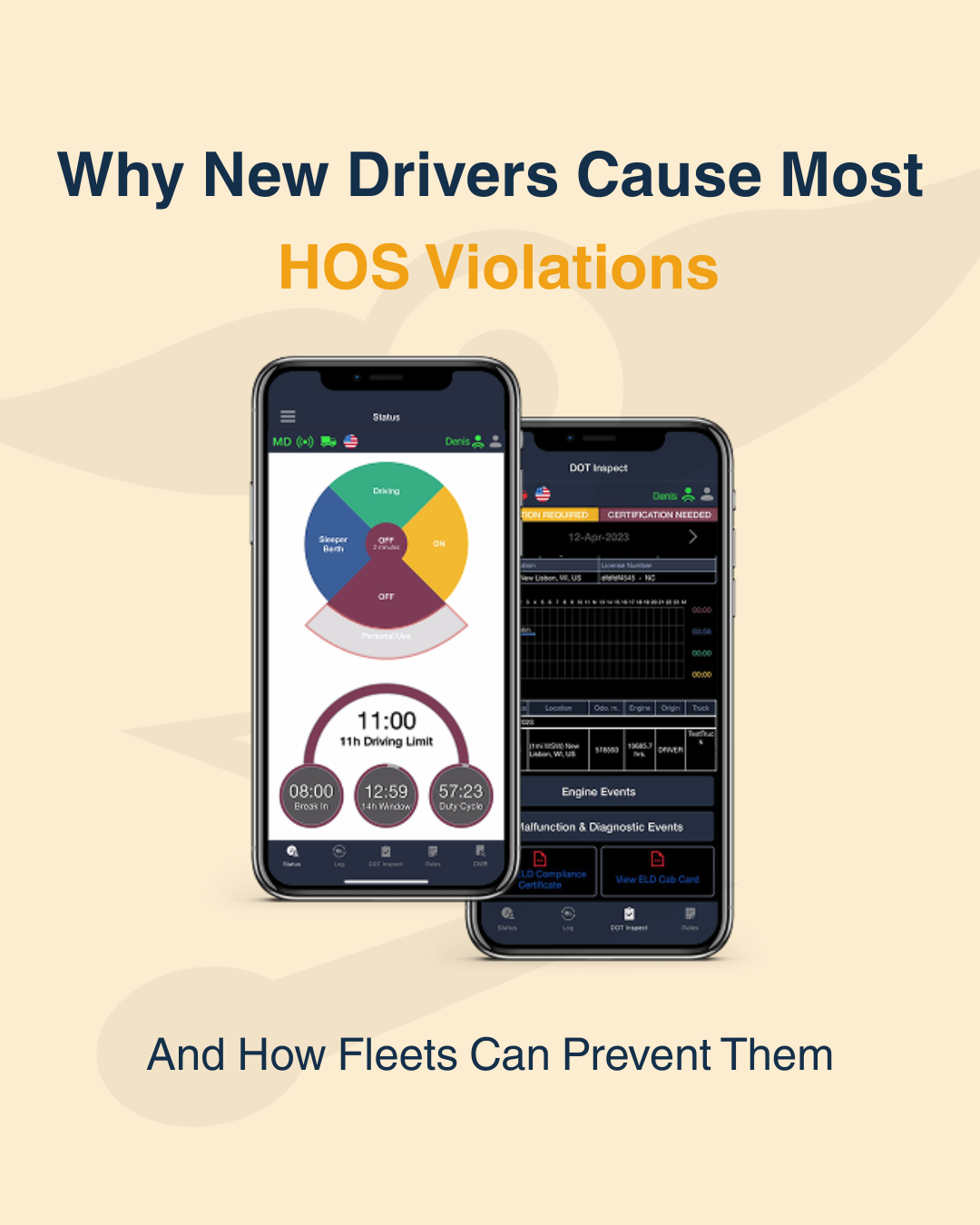
Electronic Logging Devices (ELDs) have been mandatory for several years, but 2026 became the year enforcement reached a new level. The FMCSA and state road inspectors now have access to centralized data analytics systems that automatically detect:
- Systematic HOS (Hours of Service) violations — including hidden device manipulation;
- Discrepancies between ELD data and GPS records;
- Fatigue-driving patterns based on telematics.
Previously, a single violation could go unnoticed. Today, algorithms analyze months of data and identify systematic violations — leading to serious sanctions, up to and including lifetime disqualification for repeated serious offenses.
Additional Factors That Get Less Coverage
A disqualification is not always final. Here’s what to do:
- Find out the exact reason — contact your state’s DMV and request a written explanation.
- Consult a transportation attorney — many disqualifications are successfully contested, especially when there was a procedural error by the employer or the inspecting authority.
- For substance-related violations — the only path back to a CDL runs through the SAP (Substance Abuse Professional) program: evaluation, treatment, and follow-up testing.
- Don’t delay — there are strict appeal deadlines, and missing them means forfeiting your right to contest the disqualification.